Latest Posts
Browsing Category
"Mark Zuckerberg"

Facebook has spent eight years nudging its users to share everything they like and everything they do. Now, the company is betting it has enough data so that people can find whatever they want on Facebook. Facebook’s “graph search” tool, rolled out on Tuesday, lets its more than 1 billion users trawl their network of friends to find everything from restaurants to movie recommendations and is the company’s biggest foray into online search. The tool, which the company calls graph search, is Facebook's most ambitious stab at overturning the Web search business ruled by its chief rival, Google. It is also an effort to elbow aside other web services designed to unearth specific kinds of information, like LinkedIn for jobs, Match for dates and Yelp for restaurants.
Zuckerberg explained the difference between web search and Graph Search. “Web search is designed to take any open-ended query and give you links that might have answers.” Linking things together based on things that you’re interested in is a “very hard technical problem,” according to Zuckerberg.Graph Search is designed to take a precise query and give you an answer, rather than links that might provide the answer.” For example, you could ask Graph Search “Who are my friends that live in San Francisco?” Zuckerberg joked that a difference is “filters,” which grabbed a few chuckles.

It's currently available to only a small number of Facebook users. It lets them search their friend lists for people who, for instance, live in a particular city or like a particular movie.There are no ads right now with the service, but Facebook may soon begin placing them there, analysts believe, since the searches provide an opportunity to catch users when they're looking for somewhere to spend money. Today, Facebook uses mostly "display" ads, keyed to the viewer's interests but not their searches."We believe this could be Facebook's next billion dollar opportunity, greatly expanding the company's addressable market," said Youssef Squali at Cantor Fitzgerald. "This service will leverage the incredible amount of unstructured social data the company has to extract answers to questions about people, photos, places, and interests."
Check out Facebook Graph Search Here
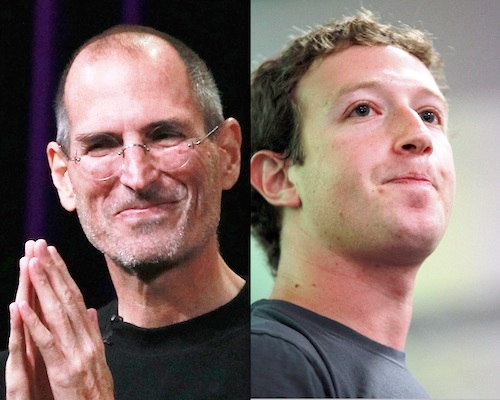 Facebook CEO Mark Zuckerberg was named worst-dressed man in technology by GQ magazine, beating out Apple's Steve Jobs and proving that astronomical sums of money can't buy style.Zuckerberg hit the top spot in the tongue-in-chic survey because of his casual, forever-collegiate wardrobe of ill-fitting hoodies, jeans, t-shirts and Adidas sandals, which GQ called a "fresh-from-Stats-class look."The CEO is "oblivious to the fact that jeans and ties come in skinny sizes -- or that suits exist." Zuckerberg has donned suit jackets in the past, such as when he met with President Barack Obama for a tech summit with major technology executives, but stuck with his trademark jeans even on these special occasions.The social network CEO's style has even inspired a mock fashion line, Mark by Mark Zuckerberg, "which thankfully doesn't sell any actual clothing," according to GQ.Zuckerberg managed to beat out Apple CEO Steve Jobs, who took second place in GQ's poll. Jobs was criticized for his trademark uniform of "black turtleneck, dad jeans and Seinfeld kicks," which the magazine said was a "style blunder no AutoCorrect can fix.""Apple releases an iPhone every 0.5 seconds," said the magazine. "Steve Jobs never gets an upgrade."Taking third place was Microsoft founder Bill Gates, which GQ took down for his "lazy preppy" wardrobe."Curious how Harry Potter will age post-Hogwarts?" GQ said. "When you're Scrooge McDuck rich, a snazzy ensemble isn't tops on your to-do."Other high-ranking tech executives who made the GQ worst-dressed tech list were HTC CEO Peter Chou, with his penchant for loose, high-waisted jeans; Howard Stringer, CEO of Sony, who apparently dresses like a fisherman; and Craigslist founder Craig Newmark, who stepped over the "fine line between looking 'artsy' and uncomfortable."Of course, Zuckerberg, Jobs, Gates and other tech leaders probably are too busy guiding world-changing technology companies to make style much of a priority. They can take consolation in their personal wealth -- Zuckerberg's fortune, for example, was recently estimated to be at least $18 billion. Fashion arbiters would probably suggest, however, that a bit more of it go to spiffing up his wardrobe.
Via-Forbes
Apple boss Steve Jobs has been pushed aside by Facebook founder Mark Zuckerberg in the latest Top 100 list of the most influential people in the UK media, published by the Guardian.The list, brought out annually by the British newspaper, is compiled by experts from the world of technology, public relations and media.Zuckerberg, who was placed seventh last year, now tops the list, with Twitter co-founder Jack Dorsey, who didn’t even appear last year, straight in at number two. The new placements at the top clearly reflect the growing influence of social networking sites in the media world.Another new entry is Amazon’s founder and chief executive Jeff Bezos, placed at number twelve. The success of the Kindle has helped raise the company’s profile even further, and this year it’s expected to release a tablet or two to go head-to-head with the iPad.Google’s Larry Page drops down one position to number three, while last year’s most influential person, Steve Jobs, is now at number five. The highest placed UK figure is Mark Thompson, the director general of the BBC, positioned at four.The rise of Facebook has been phenomenal – the social networking site launched in 2004, with Zuckerberg appearing in the Guardian list for the first time three years later in 2007 – at that time the site had fewer users than MySpace.Facebook now has around 700 million members, with the Guardian judges calling it an “immense media distribution platform” and the “number one media player” in the world today.A report back in June, however, suggested Zuckerberg’s Facebook was losing users in the US, with stats showing traffic there going down. Facebook refuted the figures.In the UK, more than 50 percent of the online population uses the social networking site. Zuckerberg, keen to get a billion people on board, is looking to China to bolster numbers.With Twitter’s Jack Dorsey now breathing down Zuckerberg’s neck after coming from nowhere, the Facebook founder will have to find new ways to keep ahead of the game in the coming twelve months if he’s to stay at the top of the tree.
BOSTON: Facebook founder Mark Zuckerberg has become richer than Google founders Sergey Brin and Larry Page , thanks to GSV Capital Corp's stake buy which values the popular social networking site at about USD 70 billion. GSV Capital Corp, earlier this week, bought 225,000 shares in Facebook at an average price of USD 29.28 each. This stake buy values the popular social networking site at about USD 70 billion. Based on the new investment, Zuckerberg in turn is worth approximately USD 18 billion, a report in Time magazine said.
"With the new valuation, Zuckerberg has one-upped Google co-founders Sergey Brin and Larry Page, whose fortunes are estimated to have dropped," the Time report said. This estimate makes Zuckerberg the third-richest man in the technology sector in the world, only behind Microsoft's Bill Gates and Oracle's Larry Ellison .
While Gates is estimated to be currently worth USD 56 billion, Ellison is the world's fifth-richest billionaire at USD 39.5 billion. Earlier this year, Zuckerberg's net worth stood at USD 13.5 billion. He had already shot past Apple's Steve Jobs last year and has now passed Google's Brin and Page, whose fortunes are now estimated to have dropped to USD 17 billion from USD 19.8 billion in March


