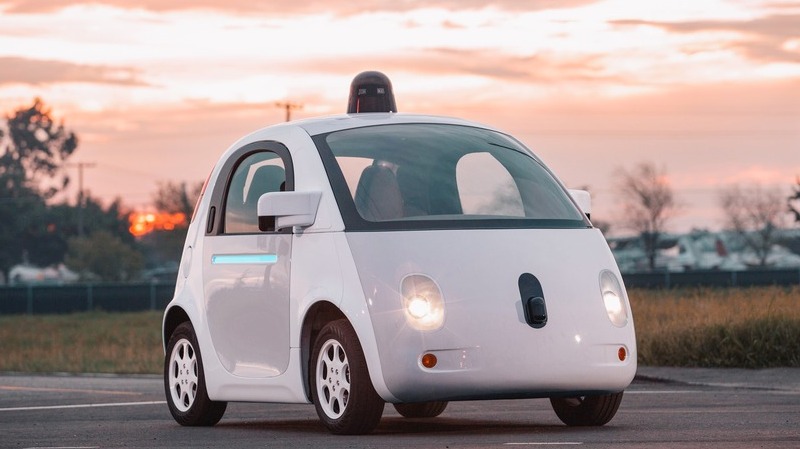
Latest Posts
Browsing Category "Self Driving Cars"

5 Electric Cars that are the hottest rides on the Road

- Wednesday, 22 June 2016 4 Comments


There's a rapid growth in electric vehicle sales happening this year, with various reports claiming an increase of 65% in 2015 compared to 2014. Since the government is thinking of increasing taxes on emissions, vehicle manufacturers have started paying more attention to electric cars. The available technology is no longer high-priced, and the average consumer can now afford to go electric. The newest models charge at full capacity in 20 minutes, and latest advances such as the "electric highway" concept is shaping up pretty fast. All things considered, why shouldn’t you invest in a hybrid when the benefits are endless? Here are 5 of the hottest electric vehicles of the year. Make your pick and choose a package that best matches with your budget and personal preferences.


 Tesla Model S

Range anxiety is one of the main reasons buyers don’t want to purchase an electric vehicle. However, Model S is the exception, and that’s what makes it great. Featuring a driving range of 200 miles (as opposite to 80 miles on other electrics), Tesla’s latest variant is a beautiful sedan you’ll certainly love to drive. The Supercharger, luxurious & spacious interiors and in-car specs are excellent attributes. The only drawback can be the price tag. Not everyone will afford to spend $100,000 (on average) on a car. And yet, Model S is an incredibly attractive sedan. Featuring an unconventional power source, an additional sports variant that reaches 62 mph in 3.1 seconds and a giant touchscreen as a dashboard, the vehicle is a must-try for this 2016.

2     Chevrolet Spark EV

Chevrolet Spark EV is this year’s most affordable electric car. It is compact on the outside, but quit spacious on the inside; the model has recently joined the group of tiny all-electric vehicles such as Nissan Leaf and Fiat 500e. Spark EV stands out from the crowd this season thanks to its brand new DC fast charging capabilities. People started paying attention to Chevrolet’s newest model in 2015 when the manufacturer dropped the overall price by nearly $1,700. The average price right now is $26,000. In terms of specs, Spark EV prides with a pleasant handling and sharp steering. Break Assist ensures excellent stability control, and the Passenger Sensing System makes the model ideal for families with kids.


    BMW i3

The all-electric BMW i3 is this year’s coolest vehicles. The purpose-built electric variant features the most unconventional design; it lacks a B-pillar which is exactly what makes the driving easy and smooth. The quality of the engineering is top-notch and BMW claims that the model can easily manage 125 miles on a sole charge. The overall performance of the i3 is outstanding; the model reaches 62 mph in roughly 7.2 seconds. As opposite to similar manufacturers such as Mitsubishi, the i3 has its technology exposed for the buyer under the most unconventional body. The space-aging style of the vehicle is made of carbon fiber, which is a strong but lightweight material.

         Nissan Leaf

Nissan’s Leaf model has been on the market for nearly 5 years now. The car has managed to score the title for the best selling electric vehicles several times, and in 2014 Nissan sold an outstanding 30,000 models. The release of the newest Leaf variant is expected to feature an extended driving range, which might overcome its main competitors.  Among some of main characteristics of this vehicle, we should mention a maximum range capacity of 124 miles, properly sized boot and lots of space inside the car.


        Porsche Panamera S E-Hybrid

Porsche’s latest Panamera model features a dual engine, thus allowing driver to choose the electric feature when on the road. Featuring advanced plug-in technology, the range of the EV varies and it usually depends on driving conditions. The electric mode of the E-Hybrid can easily get to 31 mph in 6.1 seconds. The vehicle’s top speed is 84mph, which makes this car particularly flexible to drive in busy city centers.

The current vehicle marketplace is packed with an outstanding palette of electric cars. However, only some are worth investing in. Prior to making a choice, you might want to assess your budget. Make an informed decision, and decide on the model that best matches with your preferences.

By Edward Francis and Design911.co.uk!

How Luxury car makers are experimenting with driverless car technology

- Friday, 1 April 2016 No Comments

Driverless cars may still be quite far away from mass-production, but that doesn’t mean that car makers are not making the most of what’s already available in that field. Luxury car makers are experimenting with driverless car technologies to make their cars even more appealing, and the results are nothing short of impressive. Here’s how some of the most renowned car makers make use of futuristic driverless car technologies right now.


Mercedes


Mercedes is one of the most popular names in the industry of luxury cars, and it’s no stranger to the world of car-technology either, so it’s no wonder the company dipped its toes into driverless car tech. After demonstrating the Intelligent Drive concept all the way back in 2013 at the Frankfurt Motor Show, and showcasing its view of the future of driverless with the Mercedes F015 Luxury in Motion concept car at CES2015, Mercedes pushed beyond prototypes and started implementing driverless car tech in its production cars. As a result, 2017 Mercedes E-Class comes with the Drive Pilot System, which allows the car to follow the car in front of it, while on the highway, at speeds of up to 130 mph. Other technologies will allow the car to keep its lane, assist with switching lanes, help prevent accidents when performing evasive maneuvers and even communicate with other smart cars or infrastructure.

BMW


BMW is another prestigious car manufacturer that’s been playing with autonomous car tech, managing to make their cars do a whole lot more than just drive autonomously – they can drift autonomously. While this may sound like a feature only racing fans and maybe teenagers would enjoy, it does have some practical aspects in the real driving conditions as well – teaching a car how to drift autonomously basically means teaching it how to regain control when it swirls out of control due to a sudden maneuver. This is still a proof-of-concept technology, but there are plenty driverless car-specific technologies already present in BMW’s luxury line of vehicles, namely the 7 Series, such as autonomous remote parking and the Driving Assistant Plus suite of features. 

Porsche


Porsche is renowned for its iconic sports cars. It is also renowned for being against the whole driverless-cars trend. Be that as it may, it is still working on some interesting driverless tech and a fully-electric car, both facts indicating that the company can be full of surprises. The aforementioned self-driving tech aims to increase cornering speeds in order to preserve the car’s speed, and thus reduce fuel consumption by removing the need to decelerate and accelerate at every turn. With the system rumored to be able to handle cornering forces of up to 0.7G, it will be interesting to see whether the systems make it to Porsche’s luxury cars as well, or if it will be limited to its sport line for the extra thrill.

Volvo


Volvo is one of the key players in the driverless-car race, already testing self-driving cars in Sweden, with an ambitious project to put 100 self-driving cars on public roads in real traffic, across the world, in 2017. Before fully driverless Volvos are ready to take over, though, the company made the most out of some of the systems, so the 2017 Volvo S90 comes with a semi-autonomous driving system that allows it to keep its lane and speed, with its highlight feature being the fact that it does this by accurately monitoring the road and environment, and not by tagging after the vehicle in front of it, such as the case of most of the other cars that feature autonomous cruise control. This means that the S90 can also go autonomously when there is no other car around – a leap forward.

Genesis


Genesis is a brand under the control of Hyundai, which is set to house the company’s line of luxury cars. It is off to a great start, with its flagship model, the Genesis G90 targeting the Mercedes S550 as its direct competitor – a very daring move. The tech behind the Genesis G90 might allow it to have a fair chance, though, considering the fact that the car comes with a similar level of luxury as the S550, and it’s not bad on the tech side either, incorporating several autonomous-driving features such as active cruise control, pedestrian detection or emergency braking system.

By Edward Francis and Design911.co.uk!
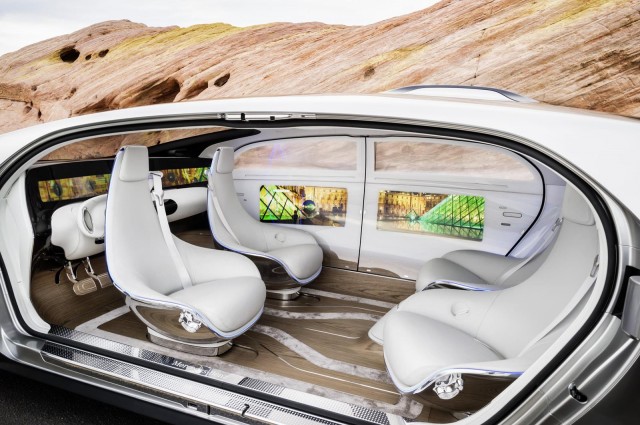
Self Driving Cars Arrival! What's still holding it back?

- Tuesday, 8 March 2016 No Comments


Self-driving cars are the future of transportation, and even though mammoth companies such as Google, Audi, Ford, and others are making tremendous efforts to bring self-driving cars to the streets, there are still some aspects that will need to be handled before driver less cars are ready to roll out. Sure, a lot of the hard work is already done, but the unresolved issues are still crucial ones. Here’s what’s holding self-driving cars back.


They’re not quite ready


While we can all agree that impressive progress has been made in the field of self-driving cars, we can also agree that these cars are not yet street-ready. Sure, there are some testing units roaming around, but a driver is also present and ready to take over in case something goes wrong.

The biggest challenge self-driving cars face is take all the variables into account, which leads to two main problems: quickly changing variables, and losing the ability to account for some variables.

Let’s start with the first – changing variables. While self-driving cars are designed from the ground up to account for variables such as other moving cars and pedestrians, there’s one additional ever-present variable that can impact the performance of a self-driving car – weather. Self-driving cars are still having an awful time dealing with snow and icy roads, for example, despite their complex systems that constantly monitor what happening around the car at all times. Even though the computers that do the math for a self-driving car are very capable, they’re still not fast enough to adapt to a ice patch on the road, and that’s where human reflexes are still way ahead of technology.

Another issue is that self-driving cars can lose the ability to account for some of the variables they encounter. These cars pack in RADAR systems, GPS, proximity sensors, cameras and much more. The failure of a single one of those elements can have disastrous results.

We’re not quite ready


It’s not only the self-driving cars that need to be ready for the roads, but also the roads need to be ready for self-driving cars, and by “the roads” we don’t mean the physical paths only, but their users as well. As previously mentioned, a big challenge for self-driving cars is dealing with variables, and the biggest variable of all is the human driver.

Whereas self-driving cars can be programmed to follow the driving code precisely, humans cannot, so chances are they will sometimes bend or break the rules, which will likely confuse a self-driving car. The most benefit solution would be for everyone to switch to self-driving cars at once, and remove human drivers altogether, leaving only rules-obedient cars on the roads. However, since that is unlikely to happen anytime soon, other solutions will need to be found. One of the popular ideas is that there should be some zones accessible only for cars in fully-autonomous mode, whereas other zones should be suitable for driving with some interaction from the driver as well.

The solution we’re most likely to see implemented, though, comes under the form of artificial intelligence. Google is already known for tinkering with the field of artificial intelligence, so it won’t be exactly a surprise if they opt to “teach” their cars to mimic human behavior when the situation calls for it.

The world is not ready

Let’s imagine that self-driving cars are already there, finally ready to take on the open roads, fully prepared to face any challenge – what’s the one thing that can put a grinding half to any good idea? That’s right: bureaucracy. Governments and authorities everywhere are and will continue to be very skeptical when it comes to giving the green light for self-driving vehicles to roam the streets. Google had a pretty hard time obtaining the green light for testing their vehicles on public roads, despite the fact that none of their cars are fully autonomous at this point, and they all still have a driver present.


However, we can’t really blame the authorities for their decisions – just imagine a fierce car crash caused by a self-driving car that went haywire or got hacked, and all the paperwork and suing hell that will follow, and you will understand why authorities are not very keen on jumping in the self-driving car bandwagon just yet.

By Edward Francis and Ppcgb.com!