Latest Posts
Browsing Category "innovation"

5 Electric Cars that are the hottest rides on the Road

- Wednesday, 22 June 2016 4 Comments


There's a rapid growth in electric vehicle sales happening this year, with various reports claiming an increase of 65% in 2015 compared to 2014. Since the government is thinking of increasing taxes on emissions, vehicle manufacturers have started paying more attention to electric cars. The available technology is no longer high-priced, and the average consumer can now afford to go electric. The newest models charge at full capacity in 20 minutes, and latest advances such as the "electric highway" concept is shaping up pretty fast. All things considered, why shouldn’t you invest in a hybrid when the benefits are endless? Here are 5 of the hottest electric vehicles of the year. Make your pick and choose a package that best matches with your budget and personal preferences.


 Tesla Model S

Range anxiety is one of the main reasons buyers don’t want to purchase an electric vehicle. However, Model S is the exception, and that’s what makes it great. Featuring a driving range of 200 miles (as opposite to 80 miles on other electrics), Tesla’s latest variant is a beautiful sedan you’ll certainly love to drive. The Supercharger, luxurious & spacious interiors and in-car specs are excellent attributes. The only drawback can be the price tag. Not everyone will afford to spend $100,000 (on average) on a car. And yet, Model S is an incredibly attractive sedan. Featuring an unconventional power source, an additional sports variant that reaches 62 mph in 3.1 seconds and a giant touchscreen as a dashboard, the vehicle is a must-try for this 2016.

2     Chevrolet Spark EV

Chevrolet Spark EV is this year’s most affordable electric car. It is compact on the outside, but quit spacious on the inside; the model has recently joined the group of tiny all-electric vehicles such as Nissan Leaf and Fiat 500e. Spark EV stands out from the crowd this season thanks to its brand new DC fast charging capabilities. People started paying attention to Chevrolet’s newest model in 2015 when the manufacturer dropped the overall price by nearly $1,700. The average price right now is $26,000. In terms of specs, Spark EV prides with a pleasant handling and sharp steering. Break Assist ensures excellent stability control, and the Passenger Sensing System makes the model ideal for families with kids.


    BMW i3

The all-electric BMW i3 is this year’s coolest vehicles. The purpose-built electric variant features the most unconventional design; it lacks a B-pillar which is exactly what makes the driving easy and smooth. The quality of the engineering is top-notch and BMW claims that the model can easily manage 125 miles on a sole charge. The overall performance of the i3 is outstanding; the model reaches 62 mph in roughly 7.2 seconds. As opposite to similar manufacturers such as Mitsubishi, the i3 has its technology exposed for the buyer under the most unconventional body. The space-aging style of the vehicle is made of carbon fiber, which is a strong but lightweight material.

         Nissan Leaf

Nissan’s Leaf model has been on the market for nearly 5 years now. The car has managed to score the title for the best selling electric vehicles several times, and in 2014 Nissan sold an outstanding 30,000 models. The release of the newest Leaf variant is expected to feature an extended driving range, which might overcome its main competitors.  Among some of main characteristics of this vehicle, we should mention a maximum range capacity of 124 miles, properly sized boot and lots of space inside the car.


        Porsche Panamera S E-Hybrid

Porsche’s latest Panamera model features a dual engine, thus allowing driver to choose the electric feature when on the road. Featuring advanced plug-in technology, the range of the EV varies and it usually depends on driving conditions. The electric mode of the E-Hybrid can easily get to 31 mph in 6.1 seconds. The vehicle’s top speed is 84mph, which makes this car particularly flexible to drive in busy city centers.

The current vehicle marketplace is packed with an outstanding palette of electric cars. However, only some are worth investing in. Prior to making a choice, you might want to assess your budget. Make an informed decision, and decide on the model that best matches with your preferences.

By Edward Francis and Design911.co.uk!

iPhone SE: The New Release from Apple

- 2 Comments
The new addition in iPhone’s family is iPhone SE. Apple rolled this newest addition of iPhone on 30th of March, 2016.


One of the most crucial aspects of this edition of iPhone is the Apple’s strategy to target the first time iPhone users by availing them with the iPhone at a competitive rates.
The launch plan indirectly suggests that Apple is trying to capture the new market with iPhone SE. It inevitably will give way to plenty of first time iPhone users with SE series. Not to mention, this can also mark the return of previous iPhone users who had given up using the iPhone after iPhone 3.


This is perhaps one of the significant move by Apple to barge in to the new market by expanding the breadth of iPhone users. iPhone Se will open the floodgates for plenty of the first time iPhone users because it is the best blend of features and pricing. Indeed, it is an appealing move by apple to mark its dominance in this ever-competitive industry of mobile technology. Because of the success of Apple’s previously launched 5-Series models, the chances of SE’s success are very high.

Small Screen to Drive Design Innovation

iPhone SE has a relatively smaller screen of 4 inches, but that does not restrict its functionality. It has brought down the iPhone prices to an extent that this series of the phone is cheaper than many of the flagship phones in Britain that launched last year.  The chassis remains the same as iPhone 5 and 5S. The beauty of this phone is its size itself as the device can now easily sit at the edge of the thumb stretch.

Clicking pictures are much more fun now.

A 4-inch screen with 12MP camera. It assures what you shall on your device from what you capture will be of a crystal clear quality. The tricks and usability of a camera remain the same with this series of iPhone as it comes with integrated iSight Sensor for better quality images. This might move the 6S buyers to contemplate between SE and 6S as the camera quality remains the same for both the models.


Internally, iPhone SE is a gem

IPhone SE has more powerful than its predecessors iPhone 5 and 5S as this new addition boasts with the new A9 chip blending with the M9 c-processor, and supported by 2GB of internal RAM. It yields a bigger advantage for the SE users at it overpowers the old A7 processor with 1GB of RAM.


The end of ‘Where is the Charger’ story

iPhones are (de)famed for their battery life because if you look around, the iPhone users are constantly in search of their charging chords. But that is now the story of a past as iPhone SE comes with an impressive battery life with 1624mAh, and supporting the same is the screen size that aids in saving battery.


The Mobile app experience

Mobile app development has a significant role to play in giving the users the kind of experience they yearn for from their iPhones. It is in the hands of the mobile app development companies to deliver excellence to the iPhone users with the best iOS app development. 


But, when it comes to iPhone SE, there are a couple of restrictions due to the screen size and app developers must take into consideration the iPhonse SE’s screen specifications seriously to give the best UX. Clearly, you can't have fun viewing HD movies in this version of iPhone. For better results, iOS app developers are expected to custom make iOS applications for the iPhone SE.  It is very much evident in case you downsize the experience from 6S to SE; the app content looks a little cramped and fudgy on screen. 

One of the biggest drawbacks is the absence of 3D touch from iPhone SE as this is where the future lies. Over a period, one will quickly feel the lack of 3D touch on iPhone SE.
But, to sum up the overall iPhone SE story, it is a great fit for a $400 apple phone. Considering the dominance of smartphones in the emerging markets like India, Bangladesh, Pakistan, there is a lot of scope for iPhone to fit in the people’s pocket – in both the ways. 


Author Info:


Karan Dave is a magical word-weaver and a creative content expert with one of the top mobile app development companies, Peerbits. He likes to keep himself updated with the latest technology news and gadgets.

How Luxury car makers are experimenting with driverless car technology

- Friday, 1 April 2016 No Comments

Driverless cars may still be quite far away from mass-production, but that doesn’t mean that car makers are not making the most of what’s already available in that field. Luxury car makers are experimenting with driverless car technologies to make their cars even more appealing, and the results are nothing short of impressive. Here’s how some of the most renowned car makers make use of futuristic driverless car technologies right now.


Mercedes


Mercedes is one of the most popular names in the industry of luxury cars, and it’s no stranger to the world of car-technology either, so it’s no wonder the company dipped its toes into driverless car tech. After demonstrating the Intelligent Drive concept all the way back in 2013 at the Frankfurt Motor Show, and showcasing its view of the future of driverless with the Mercedes F015 Luxury in Motion concept car at CES2015, Mercedes pushed beyond prototypes and started implementing driverless car tech in its production cars. As a result, 2017 Mercedes E-Class comes with the Drive Pilot System, which allows the car to follow the car in front of it, while on the highway, at speeds of up to 130 mph. Other technologies will allow the car to keep its lane, assist with switching lanes, help prevent accidents when performing evasive maneuvers and even communicate with other smart cars or infrastructure.

BMW


BMW is another prestigious car manufacturer that’s been playing with autonomous car tech, managing to make their cars do a whole lot more than just drive autonomously – they can drift autonomously. While this may sound like a feature only racing fans and maybe teenagers would enjoy, it does have some practical aspects in the real driving conditions as well – teaching a car how to drift autonomously basically means teaching it how to regain control when it swirls out of control due to a sudden maneuver. This is still a proof-of-concept technology, but there are plenty driverless car-specific technologies already present in BMW’s luxury line of vehicles, namely the 7 Series, such as autonomous remote parking and the Driving Assistant Plus suite of features. 

Porsche


Porsche is renowned for its iconic sports cars. It is also renowned for being against the whole driverless-cars trend. Be that as it may, it is still working on some interesting driverless tech and a fully-electric car, both facts indicating that the company can be full of surprises. The aforementioned self-driving tech aims to increase cornering speeds in order to preserve the car’s speed, and thus reduce fuel consumption by removing the need to decelerate and accelerate at every turn. With the system rumored to be able to handle cornering forces of up to 0.7G, it will be interesting to see whether the systems make it to Porsche’s luxury cars as well, or if it will be limited to its sport line for the extra thrill.

Volvo


Volvo is one of the key players in the driverless-car race, already testing self-driving cars in Sweden, with an ambitious project to put 100 self-driving cars on public roads in real traffic, across the world, in 2017. Before fully driverless Volvos are ready to take over, though, the company made the most out of some of the systems, so the 2017 Volvo S90 comes with a semi-autonomous driving system that allows it to keep its lane and speed, with its highlight feature being the fact that it does this by accurately monitoring the road and environment, and not by tagging after the vehicle in front of it, such as the case of most of the other cars that feature autonomous cruise control. This means that the S90 can also go autonomously when there is no other car around – a leap forward.

Genesis


Genesis is a brand under the control of Hyundai, which is set to house the company’s line of luxury cars. It is off to a great start, with its flagship model, the Genesis G90 targeting the Mercedes S550 as its direct competitor – a very daring move. The tech behind the Genesis G90 might allow it to have a fair chance, though, considering the fact that the car comes with a similar level of luxury as the S550, and it’s not bad on the tech side either, incorporating several autonomous-driving features such as active cruise control, pedestrian detection or emergency braking system.

By Edward Francis and Design911.co.uk!

Self Driving Cars Arrival! What's still holding it back?

- Tuesday, 8 March 2016 No Comments


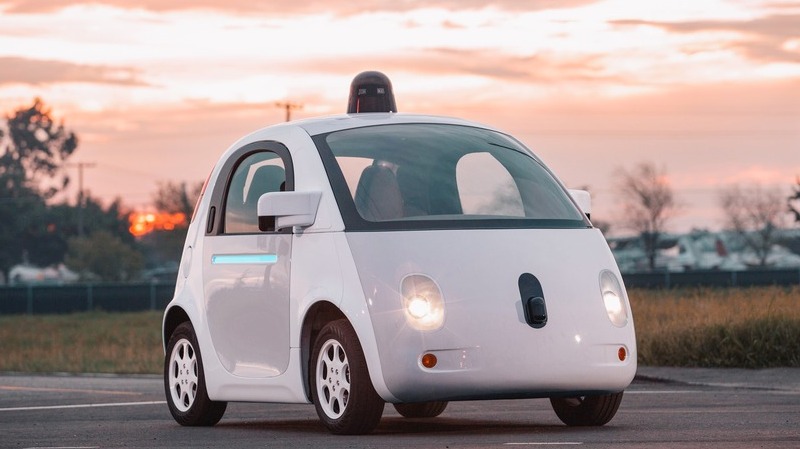
Self-driving cars are the future of transportation, and even though mammoth companies such as Google, Audi, Ford, and others are making tremendous efforts to bring self-driving cars to the streets, there are still some aspects that will need to be handled before driver less cars are ready to roll out. Sure, a lot of the hard work is already done, but the unresolved issues are still crucial ones. Here’s what’s holding self-driving cars back.


They’re not quite ready


While we can all agree that impressive progress has been made in the field of self-driving cars, we can also agree that these cars are not yet street-ready. Sure, there are some testing units roaming around, but a driver is also present and ready to take over in case something goes wrong.

The biggest challenge self-driving cars face is take all the variables into account, which leads to two main problems: quickly changing variables, and losing the ability to account for some variables.

Let’s start with the first – changing variables. While self-driving cars are designed from the ground up to account for variables such as other moving cars and pedestrians, there’s one additional ever-present variable that can impact the performance of a self-driving car – weather. Self-driving cars are still having an awful time dealing with snow and icy roads, for example, despite their complex systems that constantly monitor what happening around the car at all times. Even though the computers that do the math for a self-driving car are very capable, they’re still not fast enough to adapt to a ice patch on the road, and that’s where human reflexes are still way ahead of technology.

Another issue is that self-driving cars can lose the ability to account for some of the variables they encounter. These cars pack in RADAR systems, GPS, proximity sensors, cameras and much more. The failure of a single one of those elements can have disastrous results.

We’re not quite ready


It’s not only the self-driving cars that need to be ready for the roads, but also the roads need to be ready for self-driving cars, and by “the roads” we don’t mean the physical paths only, but their users as well. As previously mentioned, a big challenge for self-driving cars is dealing with variables, and the biggest variable of all is the human driver.

Whereas self-driving cars can be programmed to follow the driving code precisely, humans cannot, so chances are they will sometimes bend or break the rules, which will likely confuse a self-driving car. The most benefit solution would be for everyone to switch to self-driving cars at once, and remove human drivers altogether, leaving only rules-obedient cars on the roads. However, since that is unlikely to happen anytime soon, other solutions will need to be found. One of the popular ideas is that there should be some zones accessible only for cars in fully-autonomous mode, whereas other zones should be suitable for driving with some interaction from the driver as well.

The solution we’re most likely to see implemented, though, comes under the form of artificial intelligence. Google is already known for tinkering with the field of artificial intelligence, so it won’t be exactly a surprise if they opt to “teach” their cars to mimic human behavior when the situation calls for it.

The world is not ready

Let’s imagine that self-driving cars are already there, finally ready to take on the open roads, fully prepared to face any challenge – what’s the one thing that can put a grinding half to any good idea? That’s right: bureaucracy. Governments and authorities everywhere are and will continue to be very skeptical when it comes to giving the green light for self-driving vehicles to roam the streets. Google had a pretty hard time obtaining the green light for testing their vehicles on public roads, despite the fact that none of their cars are fully autonomous at this point, and they all still have a driver present.


However, we can’t really blame the authorities for their decisions – just imagine a fierce car crash caused by a self-driving car that went haywire or got hacked, and all the paperwork and suing hell that will follow, and you will understand why authorities are not very keen on jumping in the self-driving car bandwagon just yet.

By Edward Francis and Ppcgb.com!

Mobile Payments: A Big Opportunity for Small Business Owners

- Tuesday, 17 February 2015 No Comments


Mobile Payments: A Big Opportunity for Small Business Owners Small business owners are mostly concerned about the cash flow being seamless and reliable. They are very much worried regarding dealing with the fluctuations. Any gap – or “lumpy money’ – in a small business concentrates the attention of the owners towards expansion very difficult. Cash records on registers and mails, if lost cause such gaps creating considerable troubles for the owners.


With the use of mobile payments, it is very much easier for the owners to turn their sales into working capital overnight. Now, instead of payments on checks, the owners can switch to the on spot payment strategy by using mobile payment services.

Not very long ago, billing the customers for the services like catering, plumbing, photography and the likes, was the usual medium of payment, which also involved a long term wait for the customers to pay and those payments to arrive.

Switching to the advanced payment methods such as mobile payment helps such businesses to grow themselves significantly. Following are some of the tools provided by the mobile payment that ensure quick payments.

Mobile-card readers

Also known as “dongles”, these readers are attached to the audio jack of the smartphones, providing the owners with an ability to just swipe the credit or debit cards from anywhere. The cost per transaction is usually around 2.75 percent of the transaction amount.


Image Credit: www.businesswire.com

Electronic invoicing

Invoices and bills are no more a piece of paper. Electronic billing provided by a variety of software apps enables the small business owners to automate the receipts, invoices and bills and preserve them digitally. These services usually cost about $15 per month.


Image Credit: www.cloudtradenetwork.com

Photo-card processing

Apart from the card reading technique, another way of charging payments digitally is the photo-card processing, where a snapshot taken of the credit or debit card is analyzed by a software app to interpret or translate the card number, which is then used by the app to charge for the payment. The charges for this service usually range around 20 cents per transaction, along with 1.95 percent of the transaction for the debit cards and 2.95 percent for the credit cards.


Image Credit: www.tnooz.com

Small business owners are usually a part of the payroll cycle where they have to pay back to the suppliers from the revenue they generate from such businesses. Delays in the delivery of payment cause hindrance in the cash flow, disturbing the cycle. This hindrance can now be avoided with the help of on spot payments using mobile payment tools.

The rate at which the modern payment technologies are being adopted by the small business owners is very high. This explains the interest of the owners in the ways of speeding up the cash flow. Moreover, the on spot payment using such methods also reduces the need of loans by the owners for capital and they are thus benefited a lot.

For the owners who are concerned about the security of their finances using mobile payments, it is necessary to be mentioned that in case of added levels of security to these payment services, mobile payments can make all the financial transactions much safer than the credit or debit cards.

Along with all the support that these methods provide the owners of small businesses, they are also saved from the cumbersome exercise of rattling papers and pens for jotting down the financial details and sales in their registers or having them input manually to the computers. With mobile payments, all this work is done by the apps and all the data is recorded digitally and preserved for reference, if required, in the future.

Author’s Bio: This article was written by Asad Tariq. He loves technology and enjoys to meet new people who love technology. He sometimes blog at Inbound.zone


How To Find A Successful App Idea?

- Wednesday, 28 January 2015 1 Comment


Finding a successful app idea can be like trying to unearth diamonds. It's unusual to find diamonds in the earth and when you do, they must then be polished in order to convert them into the precious stones people enjoy because they don't come that way on their own. Likewise, it's unlikely you're going to incidentally come across a great app idea; however, there are some ways you can improvise your idea sourcing method so that you can come up with a potentially-successful idea for a new app.


The first thing you need to do is some market research as well as collect data and stats for your idea. The data that will be most important includes finding which apps are most popular and which are the least popular, the most and least competitive apps categories, the type of new apps that have been downloaded the most and the least, the most lucrative apps category and the least profitable categories as well as the specific markets with issues that currently do not have apps able to address these problems. Once you have all the information and data, you can begin.


Three strategies that can help you choose a successful app idea include:

1. Finding a problem, then create an app to provide the solution.
2. Finding a feature that is not present in the market and creating an app to fulfill this need.
3. Discover niche market areas that experts struggle with, then resolve these issues with an app.

Note: Keep in mind that while the first 2 strategies might seem very different, implementation will be very similar.


1 & 2. Finding a problem and creating a solution or filling a void in the marketplace.


It is important to determine whether your app idea would fill a gap in the current app market or if it would provide a solution to a problem. If you can answer yes to these points, then take your idea and move forward; however, if your answer is no, there is another alternative. Since your idea for an app is already being addressed by another app, you need to decide if you can create an app that is better and offers more functionality. If you can provide a superior app, it will provide value to users and is something you should develop.

If you haven't yet come up with an app idea, you can use your market research data and make a choice. Decide which parameters to narrow down for your app category. For example, consider possible revenue, popularity and the current competition. You can choose a category that is quite lucrative, a category based on popularity or even one that is in a low competitive category, whichever idea you choose, choose one that will help you get fast results. Once you have determined your priority category, it's time to start digging. Just like you did earlier, it is important to now search for potential voids or problems in that particular app category or decide if you have something special to bring to the category. Pick an app idea which best meets your requirements.


3.  Developing an app solution from pain points obtained from niche experts.

There is another way that you can source ideas for an app. Target an industry with high potential and start speaking to industry experts in that field. Find out their opinions regarding pain points and provide an app to meet the problem. Also ask what they think others in the industry would likely pay for such an app. If your research goes well, you can proceed with the creation of your app and you will have an audience of likely users already waiting.

About Author -

Sushrut Padhye is a computer engineer & an MBA from Deakin University. He is a former ping pong champion who has written several quotes, poems and informative articles on technology in the past. He currently works for an android app development company as a digital marketer for apps.

What Happens When Quality And Assurance Teams Integrate?

- Tuesday, 20 January 2015 No Comments


With the expansion of mobile applications and the requirement to work and play with them, renewing and redesigning of applications have become more important, yet corporate potentials in regards to advancement plans and arrangements frequently remain well-established. Poor application evaluations can actually affect corporate reputations, yet the race to market makes it hard to test enough.


One range where groups do have control of their activities - and can impact a helpful change through them - is by working together all the more adequately. The old practice of developers dealing with code until they think its carried out and after that punting it over the divider to the Q/A office just doesn't work in today's advancement surroundings, but the practice proceeds.

Following are a few ideas that will help you achieve more "integration of people" while picking up a superior product and a less stressful workplace simultaneously.

      Combine Together and Learn New Things

The requirement for group coordinated effort in innovation advancement is not something new, yet it has become a crucial part. In 2012, analysts at San Francisco State University verified that the essential reason 10% of software development projects fizzle (and more than half miss their target release date or go over their budget) because of less or absence of communication, association and collaboration.

They hypothesized that organizations could anticipate whether a task would encounter issues by measuring how regularly the different groups included in the project has worked together, imparted through email or performed different sorts of communication. The majority of their discoveries showed that these soft abilities are important for any software project to get success but then consistently, I work with organizations whose improvement and QA groups are still siloed in their own different worlds.


The issue, obviously, is that people are creature of their habits, and it is simpler to continue doing things in a way that is counter-profitable than it is to roll out an improvement - regardless of how useful it may be. Consider group building activities where, actually for 60 minutes, engineers sit with analyzers/Q/A people, and the other way around. Go out for a stroll in one another's shows (with direction from an "expert" obviously) and perceive the extent to which it changes viewpoints.

Take a Page from the Agile Book

I would say, engineers who have adopted even a little of agile procedures have the least demanding time working with others as a group. Most firms with whom I work are working with components of both waterfall and agile - successfully a hybrid solution environment.

If the organizations have arrived at the point where analyzers are creating experiments before coding begins, and designers are building usefulness in incremental units, joint effort between the development and QA groups turns into a much less demanding procedure.
Why is this? For one thing, with agile approaches, projects do not advance so far down the road when issues occur late in the improvement cycle, it becomes easier to place fault than to simply settle the issue. Second, the quicker pace of agile cycles forces teams to cooperate at some level, which urges them to keep moving towards a genuinely synergistic environment.

        End Finger Pointing

As long as the process of development and Q/A groups are encircling each other, taking part in finger pointing when release dates slip or imperfections aren't found until creation, it is troublesome for them to see one another as partners. Analyzers blame software engineers for careless coding; programmers say analyzers didn't compose apt cases or weren't trying quick or regularly enough. The most ideal approach to end this practice is through better documentation and responsibility.

Devices or authorized documentation strategies can help with this exertion. There are bunch approaches to implement such efforts (and likely many books to guide you), and the methodology you take will be very indigent upon the strategies and advancement/testing stages you have received. To show the potential outcomes, I have given two samples from the Orasi weapons store, both of which work just with HP products.

Convey a responsibility apparatus or instrument that oversees work process and requires computerized confirmation and verification of who dealt with which tasks. One example is Orasi Digital Authenticator, which helps HP ALM customers get administrative consistence documentation under control.

- Structure (and ideally automatic) the correspondence stream in the middle of engineer and analyzer. One sample is JIRA Bridge, one peculiarity of which is to consequently synchronize data about imperfections and requirements between the engineer and analyzer. At the point when a bit of code fizzles testing, the framework naturally sends the subtle elements and circumstances of the imperfection once more to the coder, ruling out for distortion.

This methodology may appear to be unreasonable to the thought of open communication, yet obliging groups to accept their work and archive their communications will decrease blame on laying. Moreover, the straightforward demonstration of digitizing (and shockingly better, robotizing) these communication speeds the improvement procedure, decreases errors and shows groups how a great deal more they can attain to working collaboratively and communicatively.

        Simply Get Started

Some of these proposals may be past the range of your firm; others might as of now be set up. Take from this article what meets expectations for you - the thought is to surprise the apple cart in a positive manner and change team attitude (likely including your own) to be one of solidarity, not division.

Creative groups will investigate a mixed bag of avenues for launching the dialog, regardless of the possibility that it is not in person. Without a doubt crossing the walkway needn't be a physical walk. Frequently, it is more a matter of moving one's outlook than moving one's feet. Be the first in your organization to move yours and check whether organization pioneers don't pay heed.

Author Bio:

Macy Jones is an intelligent and innovative Mobile App developer working with a leading App Development Company in Sydney, Australia. She completed her graduation in computers and now building her career in mobile apps. She is very fond of iPhone and love to try new ideas over it. After her programming and coding she likes to write blogs and articles for her official websites. You can get her on Facebook and follow her on Twitter to know all the more about her achievements.


Can You Clean Wearable Tech?

- No Comments

Wearable technology is a rapidly expanding and innovative industry, with ever more complex technological functions becoming available in wearable packages for the consumer to enjoy on a day-to-day basis. These products are marketed on the basis of their practicality and utility of design, but are these new ideas practical in terms of cleanliness – and while most of use know how to clean a laptop screen, are those of us investing in newer tech doing our bit to keep our gadgets in shape?


How to clean wearable fitness tech
Fitness tech, including heart-rate monitors, music players, and portable GPS – is becoming more and more affordable, but many units come with their setbacks. A heart rate unit strapped around your chest will quickly accumulate sweat and grime, and if the design has been poorly thought out, any nooks and crannies can become breeding grounds for germs and smells.

Sweat – loaded with corrosive salts  – is the main concern when it comes to maintaining wearable fitness tech, and while we wait for new products which will actively make the most of this bodily function it's a good idea to keep your current devices clean. Even “waterproof” materials such as neoprene can absorb sweat and dirt over time, becoming increasingly odorous and developing white stains.

If your sports tech has a fabric casing which can be detached from the electronic component, consider making it routine to do so after big workouts, and soak it overnight in a solution of warm water and mild washing detergent. Rinse it through in hot water the next morning, and dry thoroughly before use – you want to kill the bacteria causing the smell, so a thorough approach is essential.

How to clean smart watches, phones, and glasses


Like mobile phones, most wearable gadgets (including smart watches and glasses) feature ports for charging and data transfer, and like mobile phones, these ports accumulate dirt. Pocket lint can be blown out with a can of pressurised air, but what about sticky layers of grit from sweat and dead skin? A very small amount of isopropyl alcohol on a cotton bud may be the answer you're looking for – get those prongs clean and shiny to restore your device's capabilities.

Sweat, oil, and other substances from your skin have a tendency to find their way onto screens too. As of January last year, wildly popular Gorilla Glass by Corning (as seen on iPhone and more) possesses antimicrobial properties by way of ionized silver particles within the fabric of the screen. This is good news in terms of hygiene, but that won't stop an accumulation of dirt. If your wearable tech's screen has a glass cover, it's safe to be a little more rough with your cleaning, but the screens of many current smart watches are LCD, and a little more delicate.

As a rule of thumb, it's best to avoid cleaning a screen whilst the device is switched on – as most of us who know how to clean a laptop screen will already know. Many screens can easily stand up to a little isopropyl alcohol or a damp cloth, but some LCD displays will be irreparably damaged as chemicals and minerals burn into the display. Powering off your device before cleaning is the safe option, and allows you to better see the smudges and crusts of dirt that have hidden away around the edges. For tips on keeping displays in top condition, (including laptops) check out this article on how to clean a laptop screen and other devices.